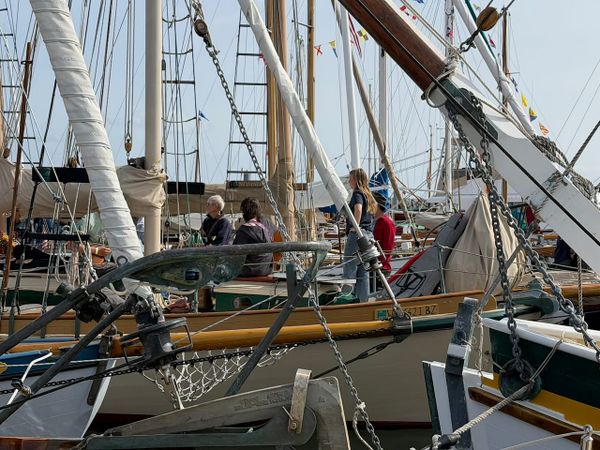
Day 5 - North U performance race week - regatta
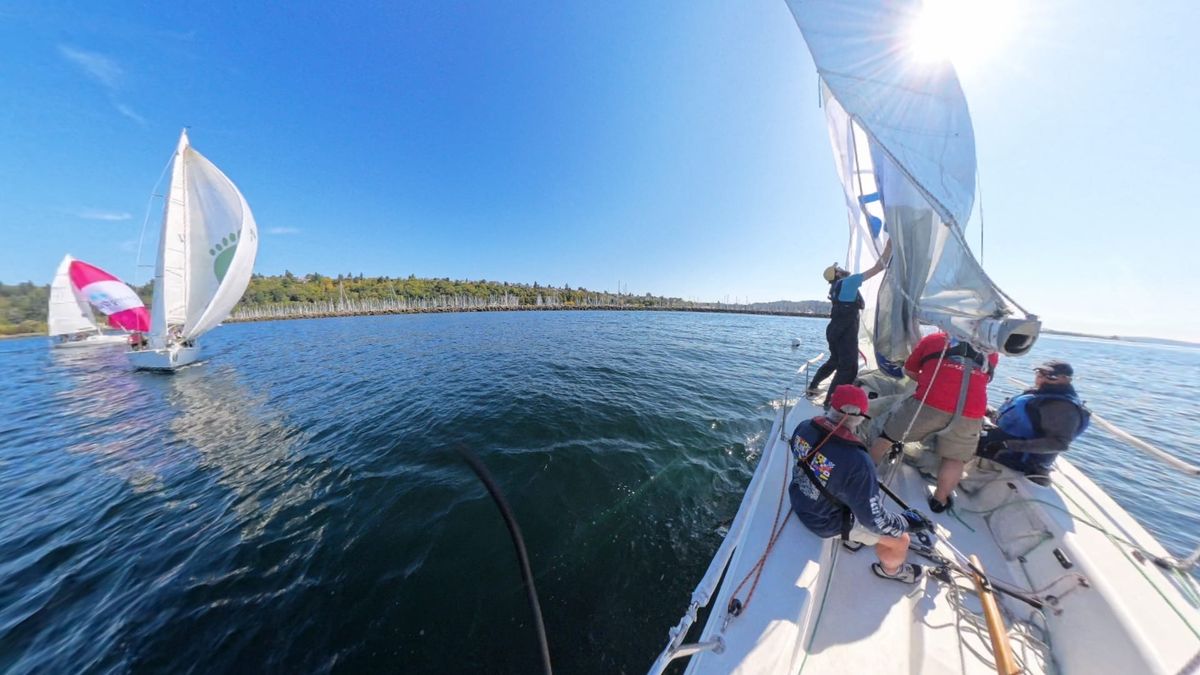
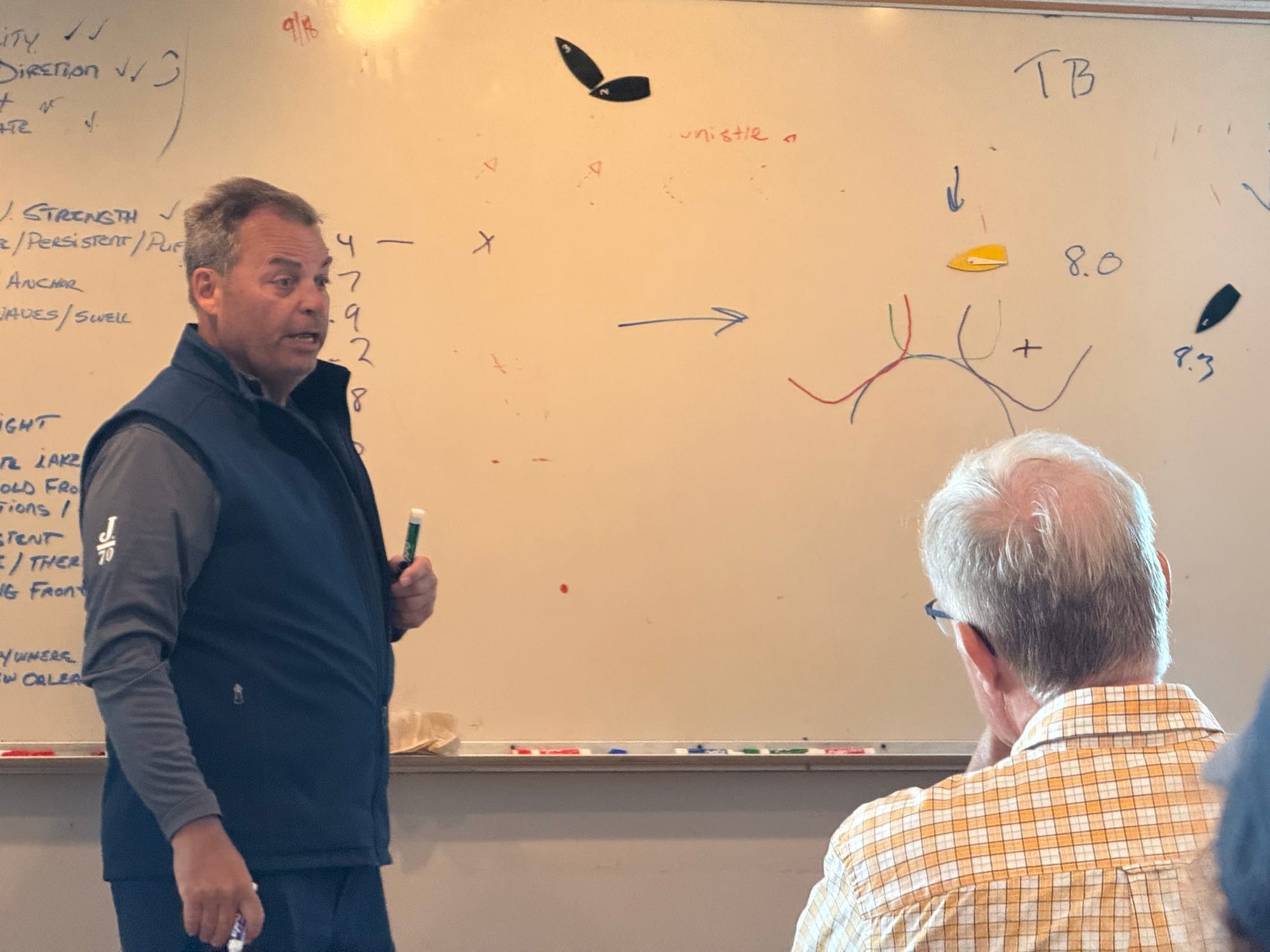
- Classroom – The Bubble (Terry)
- Introduced the concept of the bubble as a way to visualize downwind energy management.
- Key idea: keep the boat “on top of the bubble” to stay energized and fast, rather than slipping into a de-energized state.
- Downwind legs are where the biggest speed differences show up — and often where races are won and lost.
- Communication is critical: short, calm, FM-radio-style phrases between trimmer and helm (e.g., “up two,” “down three”).
- Emphasized helm technique: sit in the “happy place,” square to the task, use pressure rather than over-steering.
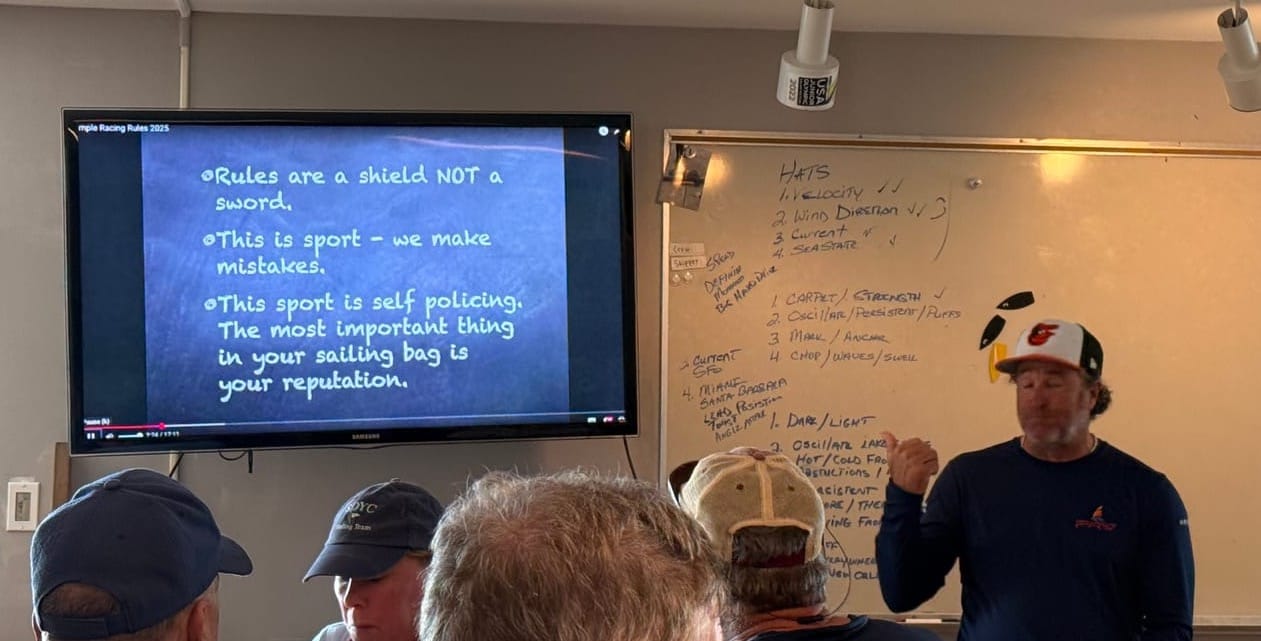
- Classroom – Racing Rules (Kristen)
- Framed rules as a shield, not a sword — meant to defend strategy and prevent collisions, not to attack other boats.
- Everyone on the crew should understand the basics, not just the helm.
- Core principles:
- Avoid contact whenever possible.
- Right-of-way comes with responsibility (you can’t crash to “prove a point”).
- Keep moving toward the next mark.
- Reputation matters — don’t be the over-aggressive “rules lawyer” or the pushover who never protests.
- Communication on the water helps: hails like “room,” “overlap,” or “keep clear” clarify intent even if not explicitly in the rulebook.
- Suggested practicing “quiver maneuvers” like penalty turns so they can be executed cleanly and quickly when needed.
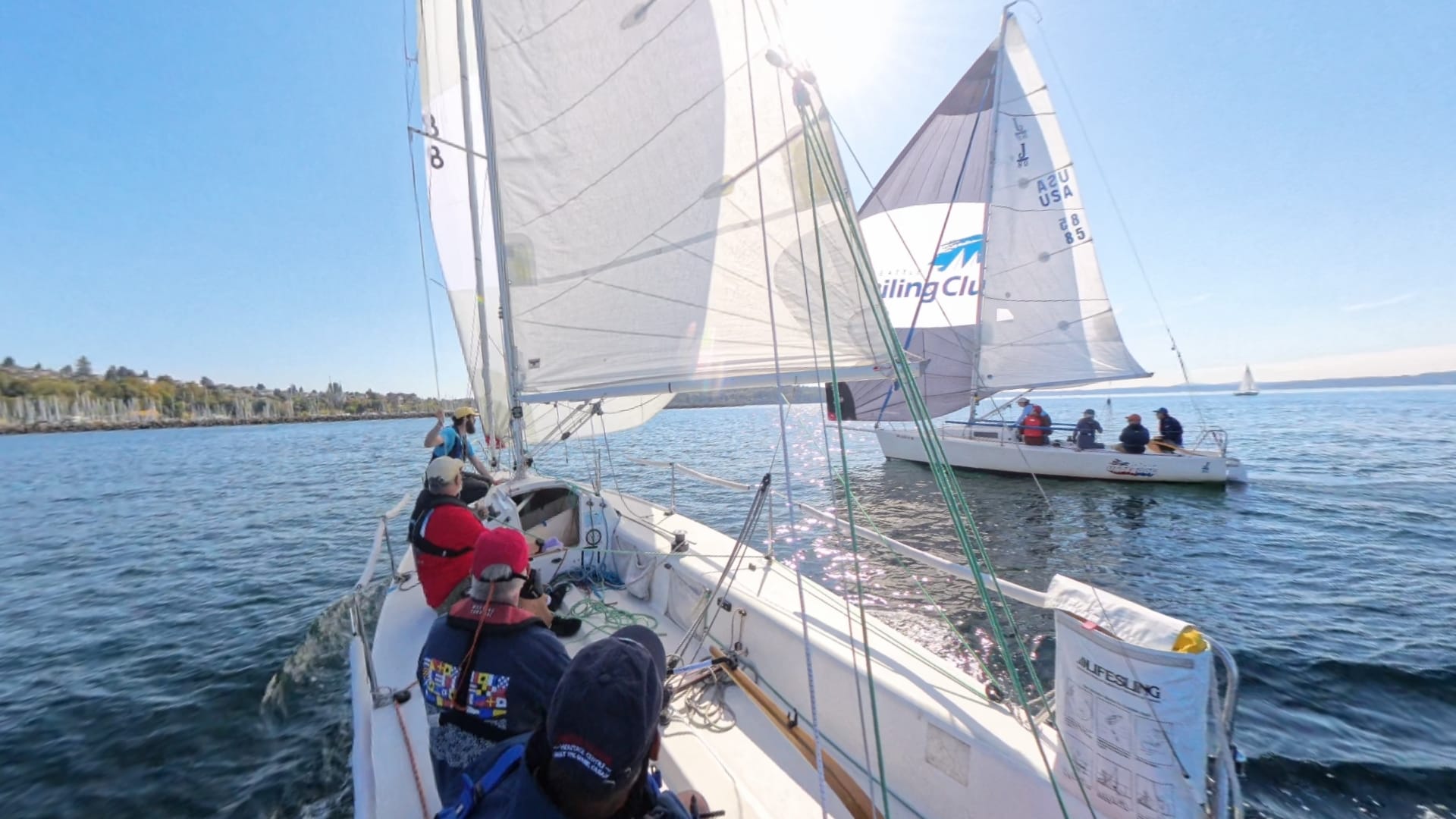
- On-the-Water – Practice Regatta
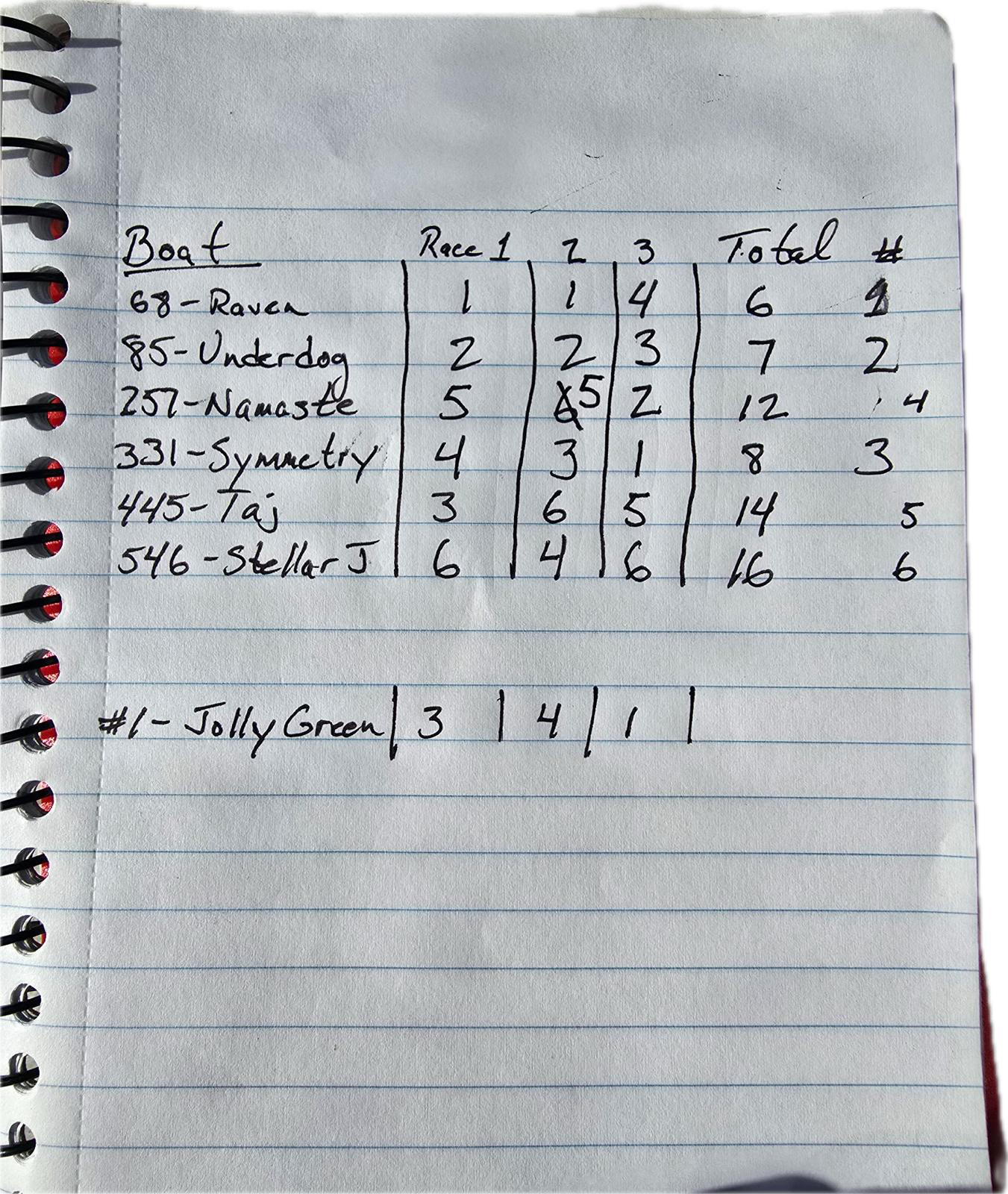
- Format: three races, each with a practice start sequence, then racing to Meadow Point and back.
- Mark helmed one race; Alex helmed two after I gave up my slot.
- Breeze was good, racing close, and the boat handling sharp.
- Crew coordination and communication showed big improvement over the week.
- We placed first overall!
- Wrap-Up & Awards (Terry)
- Praised our team for how much progress we’d made — both in boat handling and in working together.
- Highlighted how the regatta results are less important than carrying the lessons into real racing.
- Noted the strength of our family dynamic and teamwork.
- Encouraged all sailors to keep in touch and apply what we learned at future regattas (including the J/105 North Americans).